
You Are A Retired Boomer Woman. Ready To Create An Exciting New Reality?



By Karen and Erica
Are you a Boomer woman? Did you have a long career? Are you a little uneasy about what’s next?
We have some great news for you. Just as when you entered the workforce, you are on the cusp of a new world—one that you have the power to shape.
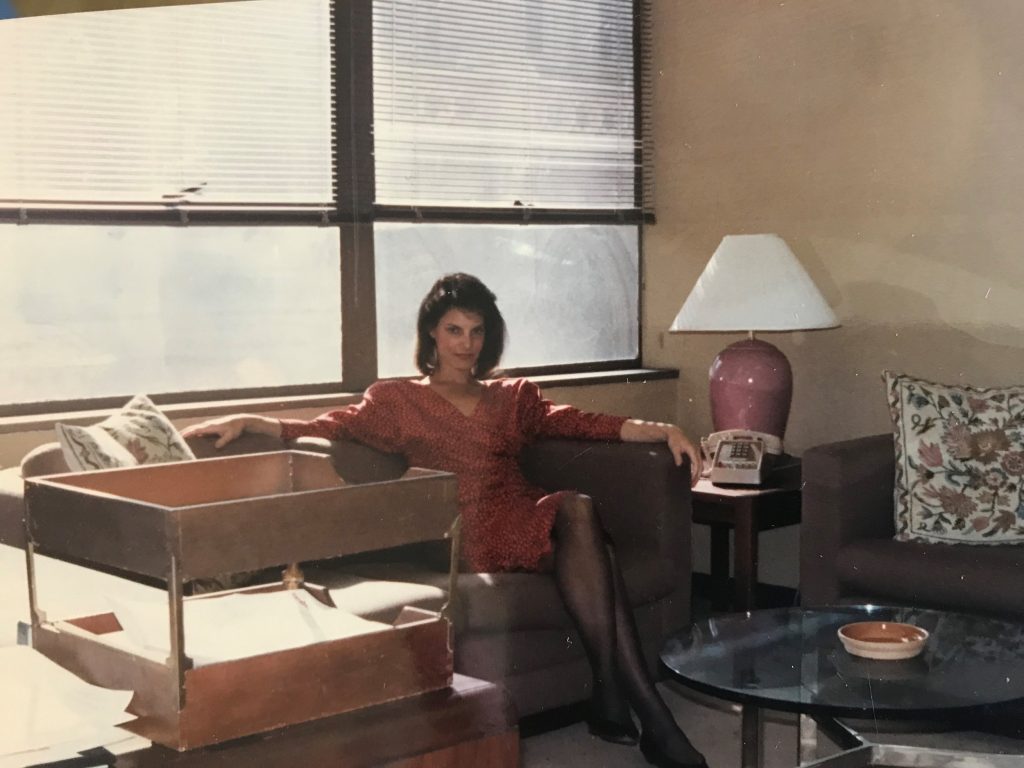
Women worked before we did, of course, and retired before we did too. But we were among the first really large numbers of women in the career workforce. We were at the forefront of change, and we entered a world that had never seen people quite like us. Together we created an image of the working girl, with Diane von Furstenberg dresses, Donna Karan suits, colorful heels and stylish totes. Markets took notice once they saw who we were. And we did things differently. Like paying our share when on a date. And deciding what to do at the end of the date.
Now, we are the first wave of women retiring in the millions. And once again we get to change the status quo. Our grandfathers’ retirement is not for us. We are visible, vital and vivacious, and we want to stay connected to the world. We want an image that is new, too—visible, vital and vivacious.
And, because we are new in another way, we can in fact change things. We are in the first wave of people who will live til their nineties—and still be sentient. Our years have given us wisdom and experience, yet we are also physically and mentally vibrant and acute. And many of us will have a three decade runway. We are beneficiaries of the third demographic dividend—the benefits of a lengthened social age profile.
-
The first demographic dividend in the U.S. occurred when we shifted from being an agrarian society to being an industrial society. Both death and birth rates declined.
-
The second occurred after the post-Second World War baby boom, when many of us were born. Women had fewer children, everyone lived longer, and the older population accumulated wealth. How did that happen? Massive governmental investment in public health and education, including the alleviation of poverty and a focus on better health care, along with changing social mores.
-
The third demographic dividend refers to the rewards society will reap if we figure out how best to use the extra thirty years of healthy life that the first and second dividends have given us.
We had no idea about all of this before we read articles by Linda Fried, the head of Columbia’s Mailman School of Public Health. Dr. Fried is a brilliant epidemiologist and a revolutionary geriatrician. She has been extolling the wonder of the third demographic dividend for a over a decade. For the first time ever, we will live longer and remain healthy, and therefore we will have the benefits of age without all of its previous burdens. That’s really new. You can read more here.
Data now show that, at every stage of life, interventions to prevent disease can extend healthy longevity. Strategies exist for averting frailty and other age-linked decline, like engaging in physical activity designed to improve outcomes. We really are this remarkable new breed of human, old enough to know a thing or two, and healthy enough to use what we know.
Has COVID changed all that? Yes. COVID has demonstrated that the beneficial momentum from governmental health investments in the 1950s was slowed by the failure to continue to make such investments—indeed, COVID exposed the consequences of the retreat from principles of public health that gave us the third demographic dividend in the first place. Rational principles of public health would be directed toward ensuring that people who will age, i.e. all people who continue to live, remain as robust as possible. Healthy longevity will generate huge rewards, especially when compared to the massive costs of an unhealthy, unhappy, sidelined but long-lived population.
If you are reading this, you may be one of us—the lucky ones enjoying the third demographic dividend. If not, you will likely become one of us. Embrace and plan for this gift. We can help to design a creative blueprint for the future. We can style this new third phase of our lives to empower ourselves, and our communities, to give us purpose by engaging our skills and experience for social good, and to keep us in the world we love and in which we belong.
How will you live your third demographic dividend?

I try feeling optimistic about my next chapter. I would like to find my next career. However,I believe being 65 I am faced with age discrimination. Perhaps because at 65 I can still run circles around those in charge now? Not sure
Love the positive spin! I look forward to annoying my child and making my friends laugh for the next 30 years!
I agree with the article and changing the mindset. I agree with Sheree and with awareness age discrimination as a 67 year old. I am grateful to be solo., yet it has challenges. Decisions are made now with old ways government procedures as we move to the new chapter is challenging.I am uncertain of where the support is? Each of us older women are with our own focus and independence. Who is supporting each other? I am ready for my next chapter. There is uncertainty in the changes. Who is our new resource and support? Thank you for sharing.
Thanks, ladies. Yes. You can run circles around everyone and annoy your children for decades to come! Take some time to figure out what you want to do other than that. It might take a while but it will come.
I’m a 68 yr old woman with a lot of energy and plan to live exhuberantly until 100! As a later bloomer only getting a career @55 I’m behind financially for retirement.
As a women’s empowerment coach I get to help women reinvent themselves like I did many times over. I see many women my age becoming coaches. We have so much wisdom to share!
re: Diane’s comment.
Financial security is the foundation of women’s ’empowerment.”
I am not sure what the term female empowerment means, other than to have the ability to do what one wants, or is necessary, to improve one’s quality of life.
Keep in mind the generation of boomer women is the first to have a significant number of women relying solely on their own pensions to live on in retirement.