
Think 70 (or 80 or 90) Is Old? Think Again!

By Karen and Erica
Are you scared of getting older?
It would not be surprising if you were. Like the rest of us, you have been surrounded all of your life by media of one sort or another extolling the beauty and vitality of youth, implying that both will be fleeting, hinting that a sell-by date is looming, and suggesting that when you hit that magic age you are done.
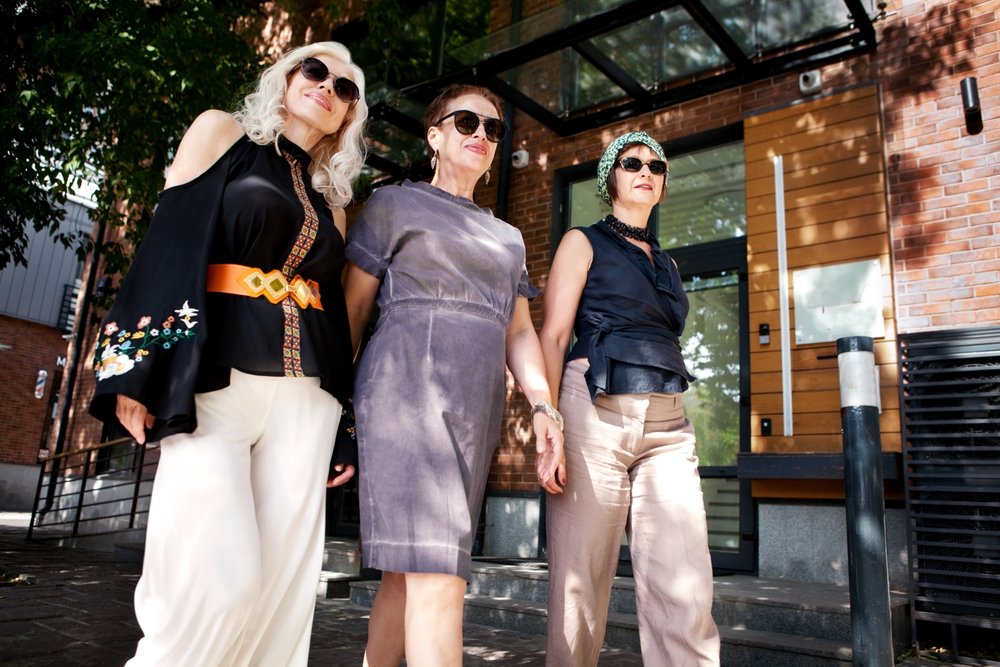
These messages are amplified by media that fail to show older people doing things that everyone else does. Walking, talking, reading, writing, traveling, dining, working out, having fun. We are pictured, if at all, as hunched over canes or looking vacant in a rocking chair.
Agism is dumb, and costly. Nevertheless, persistent agist stereotypes remain.
“We live in a society where we know sexism is wrong, we know that racism is wrong, but actually there are many, many examples where stereotyping according to age is seen as acceptable.”
So we need to fight back. These pictures are not reality. Older people, especially today, are vibrant and energetic, fun and sexy, smart and generous. When the facts come out, the capabilities—and the value—of older people are quickly appreciated. Look at this delightful AARP video. And read this bit of breaking news: Older and younger people can actually communicate!
And let’s see what Isabella Rossellini has to say, at 71:
[Q.] You seem to be in a place where your own desires and dreams are what are most important.
[A] I think that’s what is called old age. You know, they all talk about wrinkles, but talk about the freedom that comes with old age. When you’re young, there is a lot of expectation. You have to make a career; you have to prove that you can be financially independent, you can raise your children, you’re successfully married — there are so many things that you have to prove. But then as you become older, you just are lucky to be alive and healthy. And then you start saying: Well, what do I want? Let me do what I want. I mean, short of hurting anybody. I buy chickens. I play with wool. I play with the heritage breed of sheep. I go back to university and take a course on ornithology. There is a great serenity. You have to make money. I have a pension, and you know, I’ve been lucky, so hopefully I will not be a burden to anyone. And that’s it.
The need to fight agism is ever more acute because we are, as a society, aging. To view older people as needy and greedy is a self-fulfilling prophecy. Sidelining us on the false assumption that we have no agency is unhealthy. And expensive. Society cannot afford to put all of us out to pasture, with the triple negatives of imposing vast health costs on everyone, wasting the assets we possess, and making us feel bad for no good reason.
Far more productive, and consistent with the facts, would be to acknowledge that everyone who is lucky will get older, and there is no need for older to mean decrepit. If you are younger, when you see us you are looking at your future self. So let’s invest again in public heath to ensure that our future selves live rich lives that benefit those who are younger now. How about a healthy longevity grand challenge?
And let us keep connected to the working world. Most of us would cheerfully engage in purposeful activity until we are much much older than the current retirement age—set in the 1950s or earlier. The Harvard Business Review recognizes that dated thinking about retirement is a barrier that hurts everyone:
The myth propagated by the retirement industry is that people over the age of 65 should retire. Despite the billions of dollars spent convincing us that our “golden years” should involve travel, golf, and sitting around the pool, research actually shows that people who stop working and retire often suffer from depression, heart attacks, and a general malaise of not having as much purpose in their lives.
“Older employees can be incredibly valuable to companies,” says the executive director of the Global Coalition on Aging (GCOA), a research and advocacy organization that advises businesses on how to maximize the opportunities of an aging population. Indeed, intergenerational workforces are the future.
There’s increasing understanding that mixed-age teams may outperform both exclusively-young and exclusively-old groups. In the years ahead, enlightened companies will emphasize intergenerational strategies that capitalize on the energy and speed of youth and the wisdom and experience of age.
Creating accurate images of the new seventy—and eighty and ninety and more—will require work. We have no role models. But what a gift. We can design this unprecedented stage of vigor and experience all by ourselves, any way we want to.
Let’s celebrate—and then let’s get to it!

This is so true that, at the moment, we have no role models. I worked for a Congressman who became Ways and Means Committee Chairman so I had a wonderful time obtaining so much knowledge within the political world.
I was his Director of Case Work so I was able to navigate all of the agencies within the government. Helping people was my greatest honor.
I now find myself at a loss of what to do and where I’m supposed to be. I’m glad I found your network.
Love this article and strongly agree! We are not just getting older, we are getting wiser, more focused on what is important and more informed on what needs to be done next, personally and professionally. I have long believed that we have to ditch the idea of retiring and embrace the idea of continued growth and recreation of our purpose as we move into our 60s and beyond. I, for one, am not retiring. There is no plan to do that in my life. I am 64 years old and am continuing to recreate what my perfect work/life balance is as I move towards 70.