
We’re Still Overcoming The Anti-Social Pandemic.

By Erica and Karen
When COVID hit, we shut down fast. It was only going to be for a couple of weeks, right? Several years later, we are back up and running, but we may have forgotten key pre-COVID social techniques.
One of those techniques? Shopping for food. In a recent post, Dan Beuttner, who writes about Blue Zones theories for health and longevity, observed that we have abandoned the effort to shop for food. We order online instead of going to a store. Because of that, we are taking fewer steps each day, we are interacting with fewer people each day, and we are failing to take advantage of the benefits of seeing and touching our food.
We quite agree. We love to see fruits and vegetables, and rows of colorful cans and spices, and fresh fish and cheese beautifully laid out for us to consider, and to think about what we want to make for dinner. We do not regard it as a distraction or a waste of time to walk to the store and chose our food—especially now that we are post-career. And we like to cook. Not everyone does, of course, but we suspect cooking results in healthier meals than ordering in so we’re lucky we do.
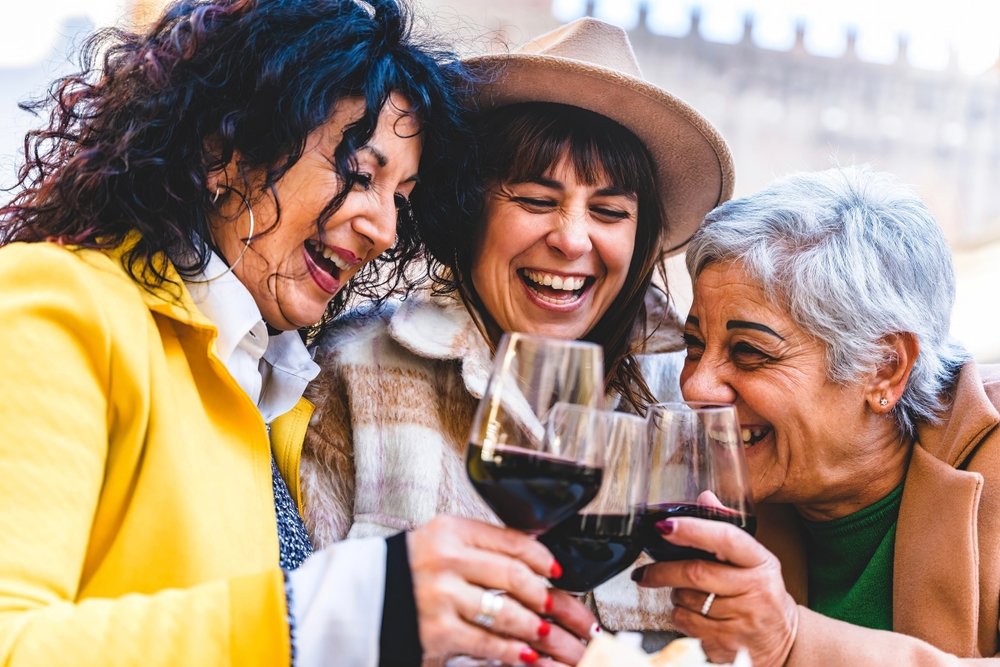
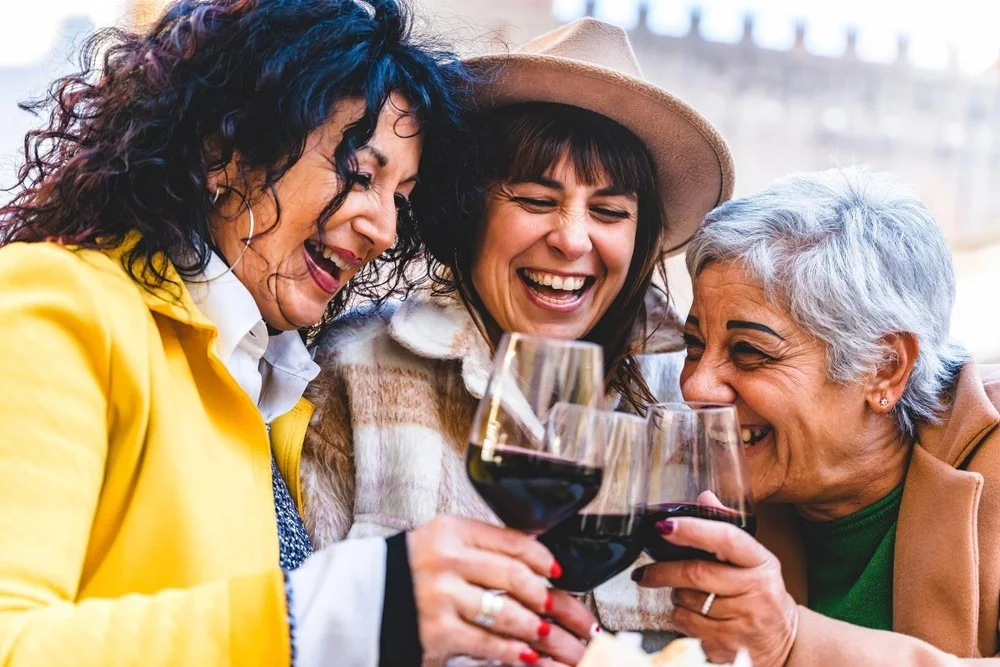
There are other things we miss, too. Our entertainment options at home are amazing. But part of the entertainment experience, sometimes, is other people. We miss the congregate setting of a real theatre. We hope theaters stop struggling just because we have lost the habit of going out.
We also have views about working from home. The flexibility created by the impositions of COVID is appealing. But the perception that WFH all the time is a good thing cannot be right. We are social beings, and we benefit from in-person interaction with others. We at Lustre do work at home, but usually we prefer to go into Lustre Global HQ.
Also, going out into the world is a reason to dress up. An opportunity to think about how we want to present ourselves. To have fun with clothes. Dressing up has always been, and remains, one of life’s pleasures for us.
In the face of COVID, we shut down fast, and stayed shut down way too long. There is no question that the psychological effects were profound.
Even though we are at a stage where we have the virus well under control, we are still deregulating its effects. Five months after the isolation measures ended, it was clear that the pandemic continued to affect certain vulnerable groups. Today’s research, focused on the COVID-19 syndrome, should take into account that patients’ emotional difficulties may overlap with the effects of the stringent first-wave measures. The COVID-19 pandemic was a major stressor for people worldwide, and the psychological impact of the pandemic may continue to affect people’s health and well-being after the acute phase.
It seems we need to relearn how to be social. Right as COVID was ending, many professionals offered suggestions for how to start. Experts in the New York Times offered eight steps toward becoming social again, like dining with someone else, or making a plan to meet.
Other experts note that being with people again may have downsides we need to practice to avoid.
From confrontations on airplanes to political arguments, many have noticed an increasingly hostile social environment in the past few years. During the pandemic, people were able to focus more on their own ideas without hearing from outside perspectives, Storch [an expert] said. Some people may experience more difficulty when dealing with others who have different opinions than their own. Storch stressed that it is possible to get along with people of differing points of view if you proceed with patience and understanding.
We have made a lot of progress. But it may make sense to be intentional about regaining our prior sociability. We learned a lot about ourselves during COVID. Including that we like being with other humans. Maybe we are only now practicing hard enough to be sure we do it right.



We want to hear what you have to say.