
Boomer Women. Four Sets Of Numbers. Do The Math.



By Karen and Erica
Boomer women, as a group, control trillions in spending. Brands and marketers know that. Yet we are largely ignored, and misrepresented in the media. We have either no image, or an image that is needy and dowdy.
That needs to change. Boomer women need to flex their economic muscle.
Here are the facts.
-
First, there are a lot of Boomers–estimated to be 73 million in 2019–and women number a little over half of them. We expect to be around for about three more decades. The population of those over 65 grew by a third in the last decade and will be 80 million by 2040.
-
Second, Boomers are wealthy—maybe worth $30 trillion. Seventy percent of U.S. disposable income is controlled by Boomers. If we were our own economy we would rank as the third largest in the world. And we spend. People over 60 spend $4 trillion a year. Boomers drive over 50% of retail sales. Spending by people over 50 is expected to rise to $4.7 trillion over the next 20 years, and spending by people over 60 is expected to be one third of all spending in the U.S.
-
Third, women rule. Their purchasing power is huge—they control over $10 trillion worldwide. As of 2017, sixty percent of all personal wealth was held by women. In 2020, 13.52% of billionaires were women. Women account for 40% of all Americans with gross investable assets of more than $600,000, and 45% of American millionaires. By 2030, at least two thirds of our nation’s wealth will be in women’s hands. Women control 85% of U.S. consumer spending, amounting to $7 trillion. We buy all kinds of things, too: 66% of computing equipment; 92% of vacations; 89% of new cars; and 46% of NFL merchandise!
-
Fourth, Boomer women really rule. We are the largest segment of female consumers and by far the biggest spenders. Women over 50 own more than three-quarters of the nation’s financial wealth and control $19 trillion. Boomer women buy 65% of new cars, 91 percent of new homes and 92 percent of travel.
OK, brands and marketers, do we have your attention? Then why are only 10% of advertising/marketing dollars devoted to Boomers, and obviously much less on Boomer women? Why do fewer than 15% of companies have a strategy focused on the Boomer market? Why do 91% of women say advertisers don’t understand them, and that they don’t relate to advertising? Why don’t brands worry when women stop using a product because they feel ignored by the brand?
And why do we care?
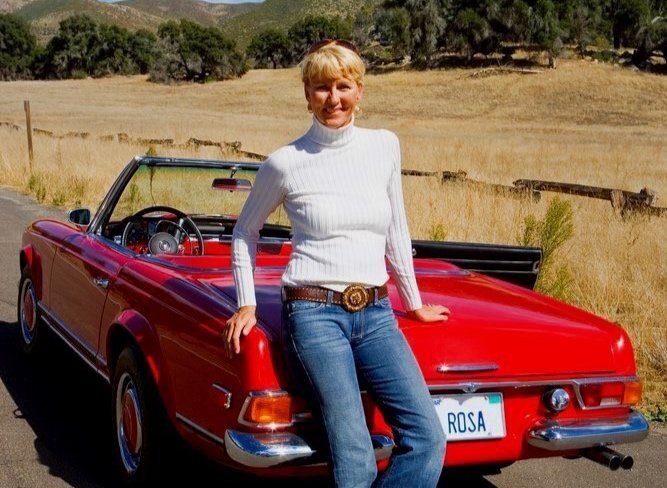
We care because the marketing media have a very important role to play in creating a picture of retired and older women. We want authentic images, in ads, in movies and tv shows, in all sorts of media. Images that show who we are. Images that show our energy and experience. We want to be seen doing things. We want to be seen as valuable resources to be deployed for social benefit, and for fun—not to be wasted because we can’t be seen.
Most of the time, that is not how we are shown. Instead, we are pictured as needy and greedy, relying on everyone else for everything. We are hidden behind images of women who have fallen and can’t get up, or who are smiling dimly next to husbands who are arranging their finances for them, or whose big thrill in life is dyeing their hair purple. Purple hair is fine, but not an indication of a purposeful life.
We, Boomer women, are a new breed and an untouched market. We have a long runway, and money to spend. We want to be seen as part of the world, with everyone else, having agency and being productive. Marketers, brands—don’t leave money on the table. Talk to us. Find out who we really are and what we want. If you create authentic images of this demographic, we will all profit.


I like being ignored by marketers. We can make our own decisions. We don’t need ads, just information from sources like you. That way we make decisions based on what we want without the spins. Unfortunately, we get way too much attention from Big Pharma. They do not want to cure us, just maintain us on their drug. I had just as soon be ignored by them. I just wish the same were true about being ignored by telemarketing.
You are so right to call out the needy and greedy images. The numbers you cite are compelling. Money has always been power. I want to see women my age depicted as powerful, sexy, vibrant, and vital- all the things that we’ve got going on. I love and admire the young women in my life though they should not be the only positive representations of being a woman. I will seek out products that acknowledge and celebrate women like me in a positive way.
Two sides of the same coin: we’re upset the 25-year-old in charge of the marketing campaign for product XYZ ignores older women as potential consumers, or shows us in an unflattering way.
But do I really need their pitch to make an informed decision? No. Do I like being ignored? No. Can I close my pocketbook to the slight? You bet.
On a positive note: noticing more women who look their age (and that of their spouse) showing up in advertising aimed at older couples dancing and kayaking their way through retirement.
The WHO just reclassified 65 yr+ from elderly/senior to middle aged.
I am 74 yr, and healthy and active, not rich, but comfortable with options, in my social circle, family, children & grandchildren, and friends.
My friends and I are dramatically different than 74 yr women of the previous generation. Education, health & financial independence are the contributing factors for our life style.
Bravo! We are a force and much like the effects of ignoring women in the workforce if you ignore this powerful market segment you will be leaving billions on the table! We’ll have to create it ourselves as we always do!
Companies need to recognize that when they are designing products and services for boomer women, these women need to be at the table helping them make critical decisions. When they push older women out the door, they lose the market intelligence, experience, and talent to align their offerings with their target audience.