
Brazil. Art and Inspiration.
By Karen
My husband and I have just returned from a remarkable first visit to Brazil.
We visited Rio de Janeiro, São Paulo and Brasilia–often described as Brazil’s three capitals–one for beauty, one for business, and one for government. I was totally inspired, especially by Brasilia.
Rio has a Miami Beach vibe. Our hotel, the Fasano, is a Philippe Stark creation on Ipanema Beach, next to Copacabana Beach. Remember the songs? Compact, very stylish rooms, with terraces and sweeping beach views. Excellent restaurant. Lovely staff.
Rio is justly famous for its beauty. The beaches, the majestic Christ the Redeemer statue towering over the city on one side, and Sugar Loaf, another distinctively shaped hill, on the other. Phenomenal views of the city and the harbor from both. One remarkable fact–many of the hillsides with the best views and the coolest breezes are home only to favelas.
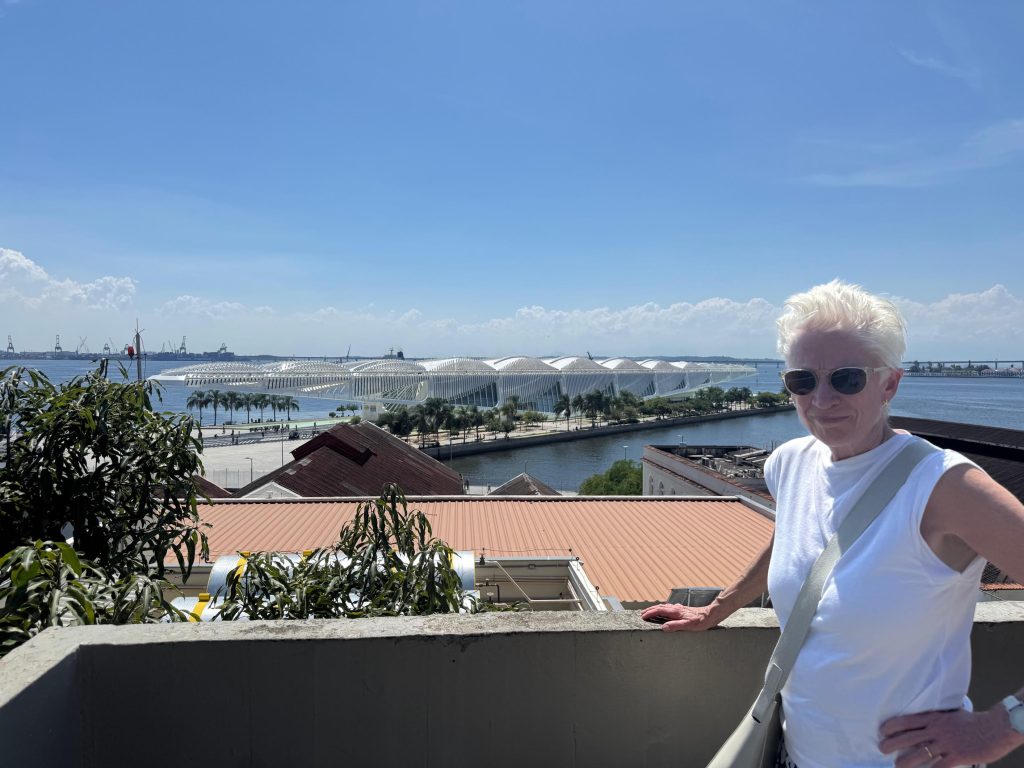
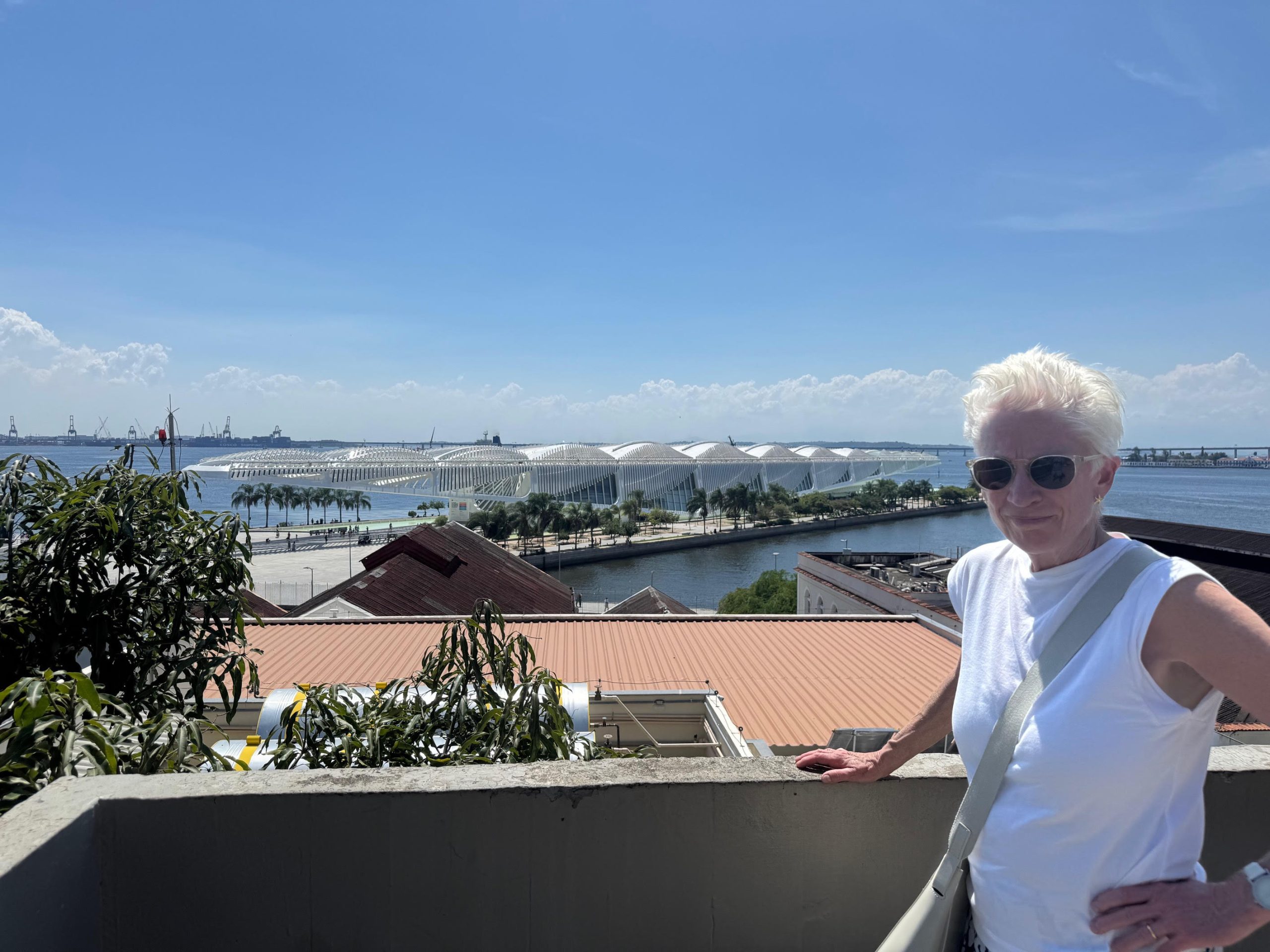
Among the sights to see–of which there are many–are the Museum of Modern Art (excellent Brazilian works of all kinds), the Museum of Tomorrow (striking architecture) and the truly exceptional Real Cabinete Portugues de Leitura, a stunning nineteenth century library the likes of which I had never seen.
Brazilian food is tasty, especially if you like hearts of palm, which I love. I also fell hard for Brazilian cheese bread, or Pão de Queijo, little cheesy bundles made with tapioca flour. I liked them so much I am planning to make some. Have some with your caipirinhas. But beware–they are addictive. To sample them, and much more, in Rio try ZsaZsa Bistro for fine food, and a low key atmosphere with amiable hosts and lots of plants.
BTW–We were warned by everyone in Rio to keep our cellphones in our pockets, to wear no jewelry, and to exercise situational awareness at all times. We followed the advice, and never felt concerned.
São Paulo is utterly different, a bustling, crowded city rightly famed for its Modernist and Brutalist buildings. Pockets of charm are everywhere. We stayed at another Fasano, in the Jardins district, a very pleasant and elegant neighborhood full of all kinds of restaurants. Jiquitaia is delightful, with traditional Brazilian food.
My husband and I have become very interested in Brazilian art, and the timing of our trip was dictated by the big Brazilian art fair, SP-Arte. We saw wonderful works there, and in the modern art museum, MASP. MASP is in an iconic building designed by a renowned architect, Lina Bo Bardi, and has become a landmark in the history of 20th-century architecture. We also visited several galleries, principally Nara Roessler, which, like many, is in a beautiful Modernist building. (Much of what we have learned about Brazilian art we learned from its New York branch.)
We were also privileged to visit several studios, where the artists generously shared their workspaces and thoughts. Among them were, in Rio, Raul Mourão, and in SP, Sergio Sister and Fabio Miguez. Each creates work we admire, and each has a fascinating story–including in some cases imprisonment under the earlier military regime. Much to learn from them.
Brasilia was our final port of call. We stayed at the B Hotel Braslia, very pleasant, with lovely public spaces and excellent breakfasts (I was particularly charmed one morning when the restaurant filled with tall young women wearing pastel pants suits, all looking like elegant flowers. Turned out they were lawyers! Of course!) In Brasilia, we sampled Brazilian beef and more hearts of palm. Try Chard by Chicago Prime (of all things) for fine dining and a fun atmosphere along the manmade lake that is one of the astounding parts of the Brasilia story.
Brasilia was the biggest surprise of our trip. Like many, we had seen pictures, but seeing it in person is revelatory. As our São Paulo guide put it–Brasilia is exquisite.
The idea that became Brasilia was long embedded in Brazil’s history.
The concept of a purpose-built capital city in the interior of the country dates back to Brazil’s independence from Portugal following the Napoleonic Wars, and was even enshrined in Brazil’s first Republican Constitution in 1891. It was not until Niemeyer’s friend and patron Juscelino Kubitschek was elected president in 1956 that progress truly began in earnest.
Brasilia was set down on a vast, windy plain in the middle of nowhere, so limitless skies form a spectacular backdrop for its breathtaking buildings. Lucio Costa created the master plan, which resembles an airplane–a fuselage, the length of which is populated by government buildings, and two wings for living spaces. (I love airplanes and big projects, so Brasilia really spoke to me.) Oscar Neimeyer designed the public buildings, and each is breathtaking. As just one example, the Foreign Affairs Ministry, the Itamaraty Palace, features monumental arches surrounded by water and brilliant gardens, inside and out, designed by Burle Marx. A superb sculptural staircase is one of many magnificent pieces of art. The windows look out at the National Congress, designed with a large convex bowl for the house and a smaller parabolic dome for the senate.
Perhaps the best known structure is the Cathedral of Brasilia, both commandingly material and remarkably ethereal, all white curves sweeping skyward, with dazzling blue stained glass–and angels. Less known, but also stunning, is the Don Bosco Santuário–not designed by Niemeyer! The exterior gives little hint of the glorious and surreal interior–stained glass windows that get darker as they rise to the sky. Don Bosco, a nineteenth century priest, is especially honored in Brasilia because he prophesied its creation.
After Brasilia, a long trip back home. I left Brazil fascinated and exhausted. And, I now realize, deeply inspired.


Adding Brazil to my must do list! Sounds fabulous! Thank you for sharing your wonderful experience!!