
Our Image In Hollywood? Needs Work.

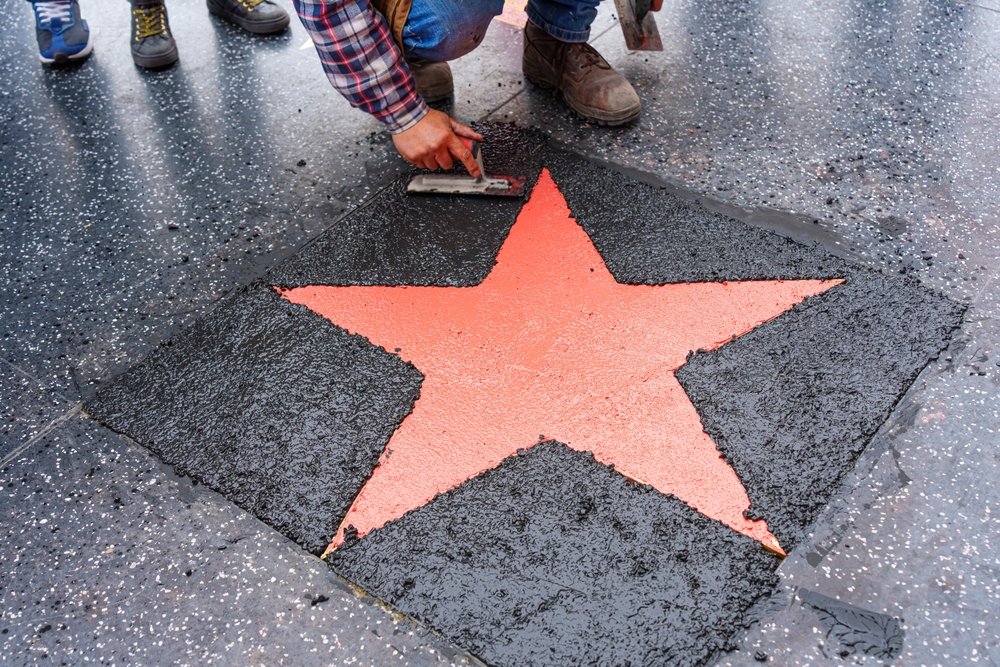
By Karen and Erica
Image is reality. By which we mean–prevailing images of older women shape the reality of how we are seen–by ourselves, and by everyone else.
One of the biggest purveyors of image is Hollywood. And for us, that is not a good thing. Getting better, perhaps, but nowhere near reflecting authentic images of older women (older than 40 in Hollywood’s case) and their place on earth today. As a recent study concluded
[T]he roles that older women are offered are often stereotypical and one-dimensional: the mother, the grandmother, or the villain. These roles tend to lack the depth and complexity that male characters enjoy. For instance, in many films, the older woman is relegated to a side role that serves to bolster the male lead’s storyline, reinforcing the idea that women’s relevance fades with age.
Compounding this problem is the fact that Hollywood executives often hesitate to cast older women in action films or romantic comedies, two genres that are highly lucrative. Even in genres where women historically had more of a presence—such as drama—there is a significant drop-off in opportunities as actresses age.
* * * * *
A glaring example of this is the stark difference in how aging women and men are portrayed on-screen. While older men are frequently depicted as wise, authoritative, or even desirable, older women are often desexualized or ridiculed for trying to maintain their youth. This feeds into the stereotype that a woman’s value is tied primarily to her appearance and ability to remain youthful.
Older women have appeared in some recent movies. Many of the films that are getting made are focusing on how wonderful life can be after raising kids or retiring. Definitely a positive message. We loved 80 For Brady. And we love the idea that women have amazing friends, and we cherish our adventures with them. But such movies present only a small picture of who we are. We should also see ourselves having fun–and doing so much more–with younger people. And older people. And we should see ourselves having romances–with older or younger people. How Stella Got Her Groove Back was a fun film along these lines–but was Angela Bassett really supposed to be older? Movies showing us interested in sex are also few and far between. Good Luck To You, Leo Grande was a breakthrough. We totally get this comment:
[Alex Saks, producer, Book Club] recalls one particular social-media moment that resonated with her—and made her feel like all her work has been worthwhile. “One of my favorite tweets that I saw after Book Club premiered was, ‘I just saw Book Club in theaters. It gave me hope that I might have sex again before I die.’ That’s why we made the movie.”
Even fewer and farther between are movies showing older women as powerful players in the larger world–real life powerful, not just royalty. And still attractive, not mean witch villains. Eye in the Sky offers Helen Mirren–in uniform but still glam–as a moderately powerful warrior. How many others are there? Not too many.
Why is that? Probably because the people making the movies have a positive vision only of men as they age.
Male gatekeepers are victims of their own dangerously outmoded messaging: You’re never too old to be a hero and get the girl. Never too old to sip your martini and hop out of a plane, mow down scores juggling a disturbingly large gun, make and lose billions, save a helpless wife, daughter or lover.
But those people have no idea who we are as we age.
A survey targeting Americans aged 50 and above reveals a disconnection between media portrayals of older individuals and audience expectations. Both men and women seek more authentic, diverse, and aspirational stories that reflect their realities, contradicting common stereotypes associated with aging.
And that has not changed in a long time
According to Stacy Smith, Ph.D., founder of the USC Annenberg Inclusion Initiative, “The percentage of women 65 years of age and older in the 100 top 2022 films is no different than the percentage from 2009. Essentially, there has been no change.”
Could that apparent inability to see reality reflect who’s in charge?
[Alex Saks] believes that’s partially because there aren’t enough women 60-plus in decision-making seats in the film industry. “We need a couple more successes like Book Club and 80 for Brady for buddy comedies about older women to become a trend,” she says. “Right now, a lot of these movies are still being made independently. If and when the studios start making them with more frequency, then you can say the landscape changed.”
Indeed, what is on screen is the direct result of the low number of women behind the camera, and in leadership roles in general. In articular, films written by women over 40, who are in their professional prime (with the life experience, professional expertise, work ethos and skills to produce high caliber projects), are simply not being produced. In 2022, only 12.6 percent of projects were written by women over 40. As the Geena Davis Institute states:
- Characters aged 50+ constitute less than a quarter of all personas in blockbuster movies and top-rated TV shows from the last decade.
- On-screen disparity is evident, with male characters significantly outnumbering females within the 50+ age bracket: 80% in films, 75% in broadcast TV, and 66% in streaming platforms.
- The narrative around 50+ characters often leans towards villainy over heroism, with 59% of films and 43.2% of TV shows featuring older villains compared to 30% and 22.1% showcasing heroes, respectively.
- Romantic storylines are disproportionately lower for characters 50+, with younger characters two to three times more likely to experience romance.
Given the power–intellectual, experiential, financial–of older women, it is difficult to comprehend why authentic pictures of older women are not presented by the industry. But maybe not so difficult when one considers their inability to see older women at all.
Time for change, Hollywood. Invite us in. We can make you rich(er).


We want to hear what you have to say.