
Strategic Workplace Dressing, Then and Now.

By Karen and Erica
While we worked in corporate settings, we used our clothes as strategically as we could.
At first, we wanted to look like little men, so no-one would notice there were women in the room. Gray suits, flat shoes, little floppy ties, briefcases. Nothing to see here.
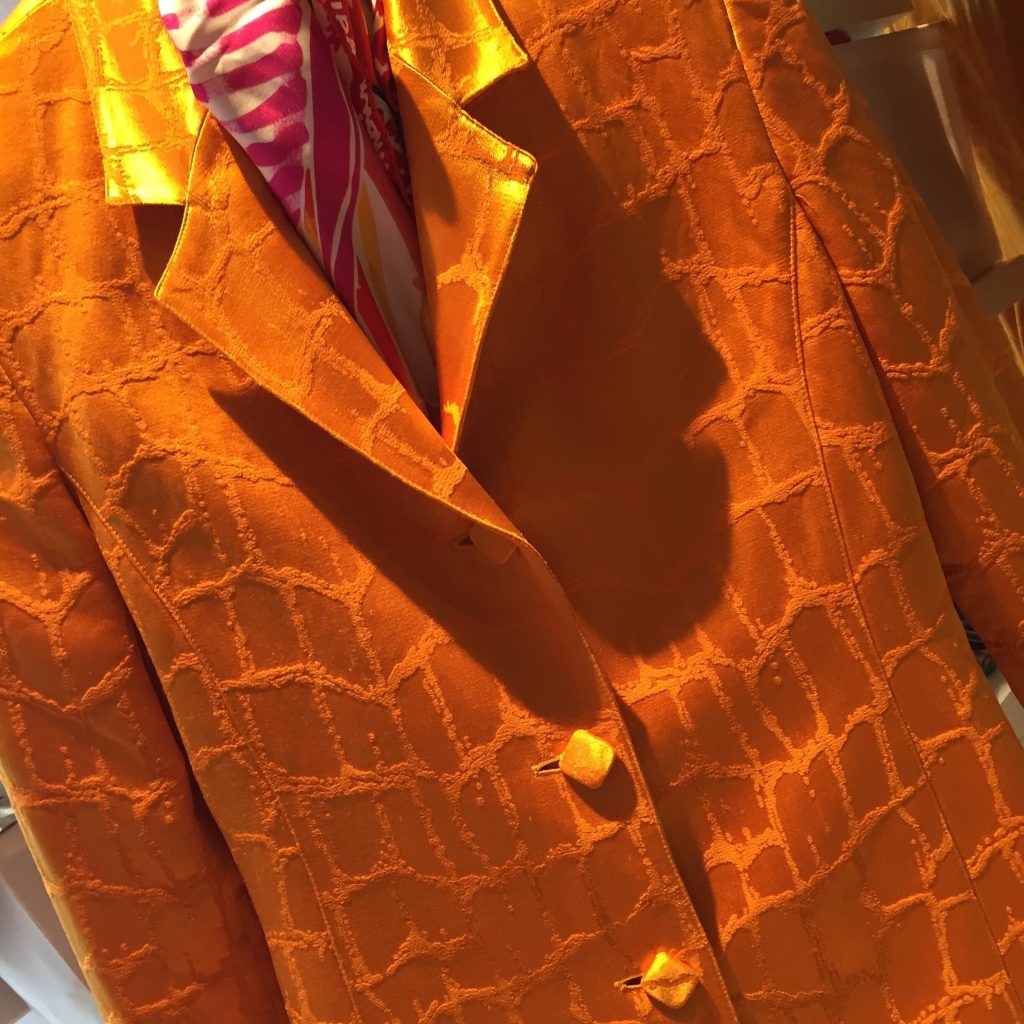
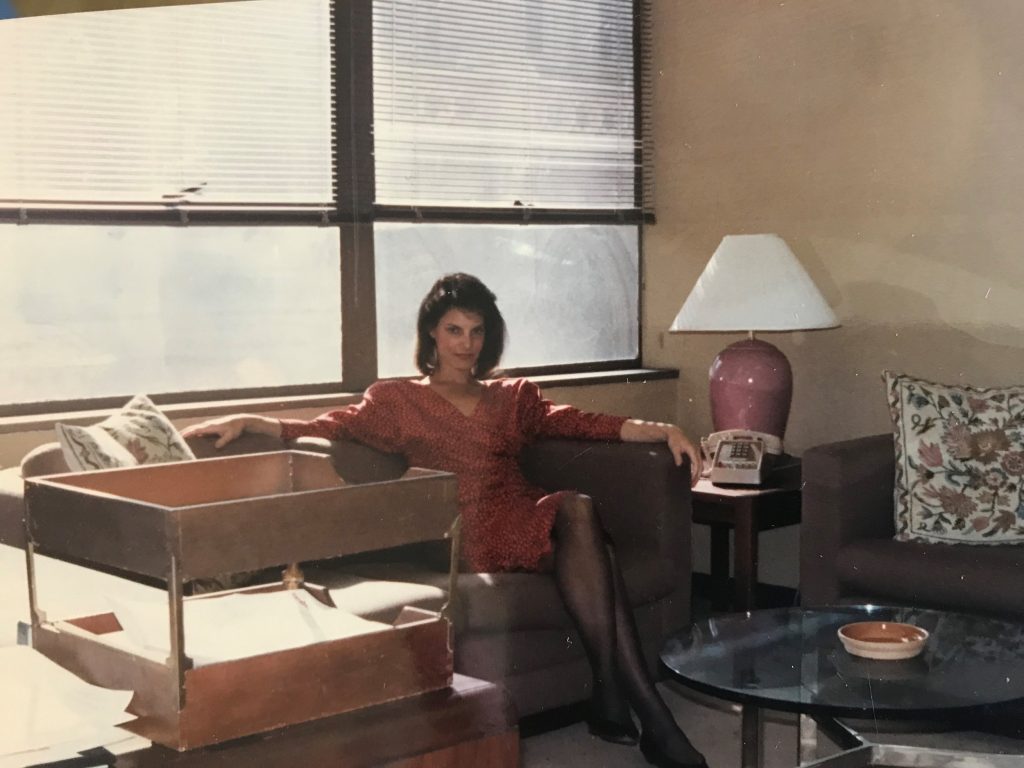
Once we established that we could do the work, and that we intended to stick around, we came out as women. After that, our attire objective was the opposite–usually. We wore color, and heels, and dresses, and totes. But we were aware that we needed to stay within the bounds of workplace requirements. So we could be a little flamboyant–but within the stricture of a suit. Colorful heels, but not stratospheric. And for certain situations, maybe we had to go back to the gray. Luckily, over time some of the gray options were very feminine.
It never even occurred to us to show off midriffs or bra straps, or cleavage. Nor could we have ever imagined men wearing shorts. We were taken aback by the view that this–2025–is the summer of too much skin at the office–not so much a consequence of Covid ignorance but more a consequence of GLP1 body pride. Yikes. Happily, it seems not everyone agrees. The workplace is for work. We too adhere to the Sopranos’ rule: A don doesn’t wear shorts. (Obviously, there was no equivalent rule for women but we can figure it out.)
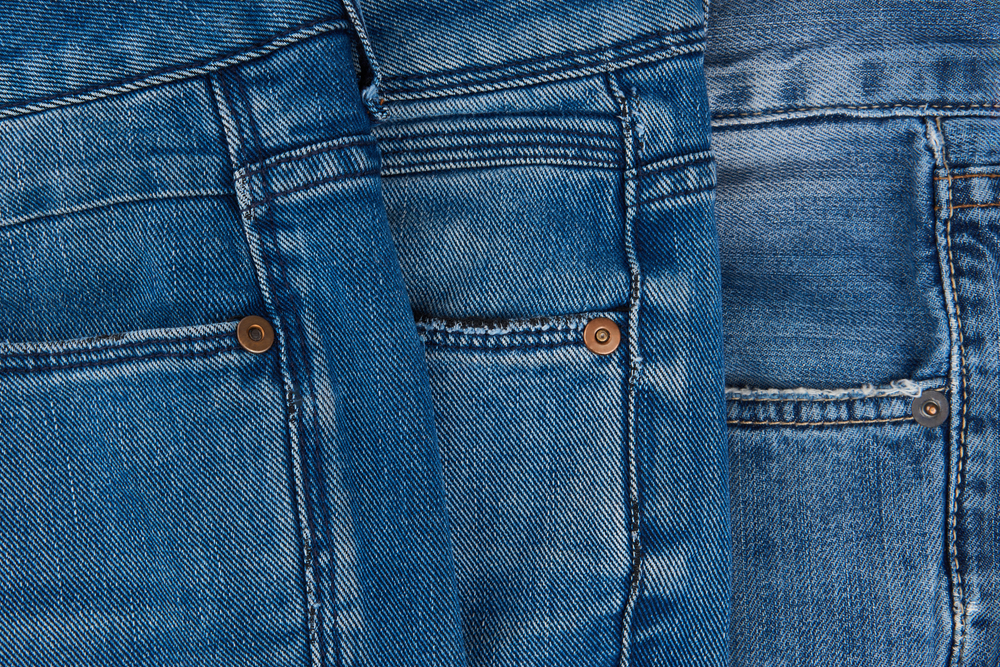
So apparently the workplace still has rules, as this article sets out. In some ways they are now more complicated than before–does a person working in an office–even a newbie–really have to be told no flip flops? Maybe. And apparently jeans are just fine, now. Both men and women would likely have been pilloried wearing jeans to work when we started out.
But in some ways the rules are pretty similar. We were amused by Rule 36:
36. Thrift from the 20th century.
If you thrift from eras when office dress codes were more closely defined, your office attire will always be appropriate. A vintage skirt suit from the ’90s or a prim dress from the ’60s gives you a cool story to tell when someone gives you a compliment. And you probably won’t have to worry about them being too short, too tight, too anything.
Weeellll—the author apparently did not live through Twiggy mini-skirts, or Missoni dresses, among other things. And yes, they were worn to work.
See-through fabrics were fashionable in Europe in the eighteenth century. See-through and transparent clothing became very fashionable in the latter part of the 1960s. In 1967, Missoni presented a show at the Palazzo Pitti in Florence, where Rosita Missoni noticed the models’ bras showed through their knit dresses and requested they remove them.
Just for old times’ sake, look at the pictures in this Vogue article!
What principles would we suggest be for today’s women in the workforce?
- Be somewhat formal. Clothing is messaging. Show that you know work means business.
- Recognize that business casual is just another form of formal.
- Within that constraint, have fun. Whether you find clothing amusing or not, develop a style that is a good setting to show you–as a worker–to the best advantage. Formal does not mean constrained.
- Remember that style gives women a strategic advantage because they have more style options. Inexplicably, men have done away with ties and cufflinks, the only things that made men’s work clothes amusing
- Be distinctive. Use color, or jewelry, or shoes, to be seen in a sea of gray or navy.
- Be yourself, and be comfortable. If you are one of those fabulous women who can walk fluidly in very high heels, wear them! That will be very distinctive. If not, don’t! If you can’t walk properly you will not look professional.
- Look smart. By that we mean situational awareness. No open-toed sandals in winter.
- Remember that style and fashion are different things, and go for style.
What would you add?


We want to hear what you have to say.