
We’re Not Invisible If You Have A Brain.


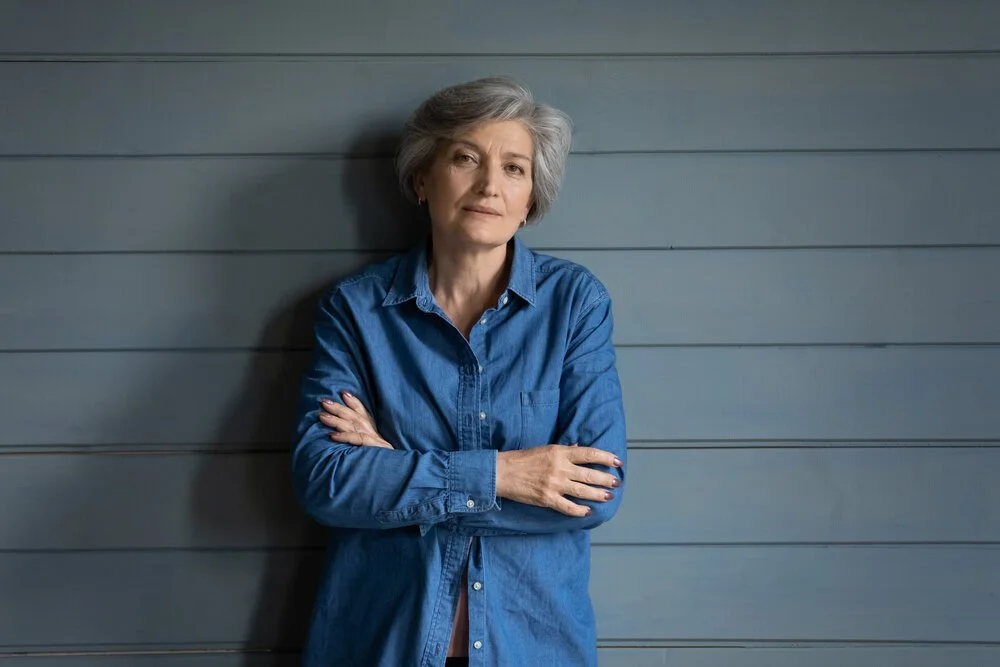
by Erica and Karen
Overnight invisibility.
We have heard from many retired women—and older women generally—that they feel invisible. The day after they leave their jobs, or they day they turn 40, they disappear.
We experienced the same thing when we retired. We were shocked. We had not changed. The experience and skills we had the day before had not evaporated. We had ended our jobs, on a high note, and now we were ready to use what we had learned to create something new. But no-one could see us. What was going on?
We thought about it for a while and concluded that one reason for our invisibility is that we are different. We no longer fit within any of the expected roles in society. We had been defined by our careers, and now we didn’t have careers—and therefore we were perceived as lacking utility. Old and done. We were hidden behind stereotypes—stereotypes that are linked to age, and an image of older women that is archaic.
Well, now we are coming out—as modern women who are the modern face of retirement. We are not going to turn on, tune in and drop out. (We didn’t do that the first time, either.) We are not going to be consigned to rocking chairs. We’re not the retirees of the 1950s. We do not plan to recede into passivity, with dim smiles on our faces as we watch flowers growing in fields.
We are women who have lived a long time, but we are not old, or feeble, or uncertain. We are vibrant and engaged. We are the lucky beneficiaries of advances in public health that mean we will live decades longer than people did a century ago, and we will remain sentient for a long time. We are pathbreakers.
We fought to become women of the world, we changed that world, and now we want to stay in the world we helped create. We will demand to be seen for who we are, and we will demand a continuing role in society. And why would anyone object? We have a lot to offer, and there are a lot of us who want to offer what we have.
We can be contributors or takers, leaders or nonparticipants, productive or needy. We can propel others toward a brilliant future, or we can be a drag on that future. The right choice is obvious. Why make the wrong one by pretending you can’t see us?
Let’s move forward in this twenty-first century, and recognize retired and older women as assets. See us, and make the most of us. It’s the modern thing to do.



It’s not that a retired woman is ‘invisible’ but rather perceived (not by everyone) as no longer ‘useful’.
By ‘useful,’ it’s what others expect a person with connections and influence in the workforce could do for them, such as boost them up the ladder of social and career mobility.
What an empowering and important AND ENCOURAGING message for anyone who has ever experienced the withering impact of ageism for no reason other than the turn of a page on the calendar. Thank you for sharing!
So how do we mobilize this different power that we have? How do we continue to impact our world/future?
I think Lustre is a great think tank for these ideas.
Amen to that.
Great article and so true. Although not for profit boards want board members to volunteer and serve on their committees, they often look for the “young people” who are too busy with their careers and families to be able to contribute and volunteer. They fail to recognize that those who are retired not only have the expertise to mentor and advise but also the available time to volunteer.
Thanks for the great comments. We are working on some ideas for mobilization but would welcome them from everyone. We are a large enough community now that we could really make something happen.
Yes to all.
For those of us who have defined ourselves by our careers retiring is even more invisible making.
Who are we now, where to we fit?
If we have been fortunate enough to work a life time at our passion, our calling, retirement is a threshold over which we will require ‘rehabilitation’.
I believe this contributes in large part to our sense of being invisible. Even beyond the invisibility of no longer being ‘viable’ as a reproductive vessel.
Reinventing ones self at 70 is quite different from at 18. It takes more energy and certainly more courage. More self confidence, self knowledge, more faith, more determination to not be seen as someone old enough to be your Grandmother.
I have truly enjoyed this moment to voice my opinion about something so vitally important to a healthy and happy life for all of us who will not accept invisibility .
Ruth, thanks so much for telling us about yourself. So interesting to hear.
We are only invisible to those who are blinded by their perceptions of what an old lady should be. Our generation, the one before us and the one right after us, has been the catalyst of change in perception of women’s role in society all along. So we take up the cause again at this phase of our existence. Our job now is to remove this stigma from the common thinking. Let’s make the world a better place once more for our daughters and our granddaughters, and their daughters, too. Let’s be the change. Let’s change the conversation. It won’t be our first time!
You have that right!