
How Did You Plan For Retirement?


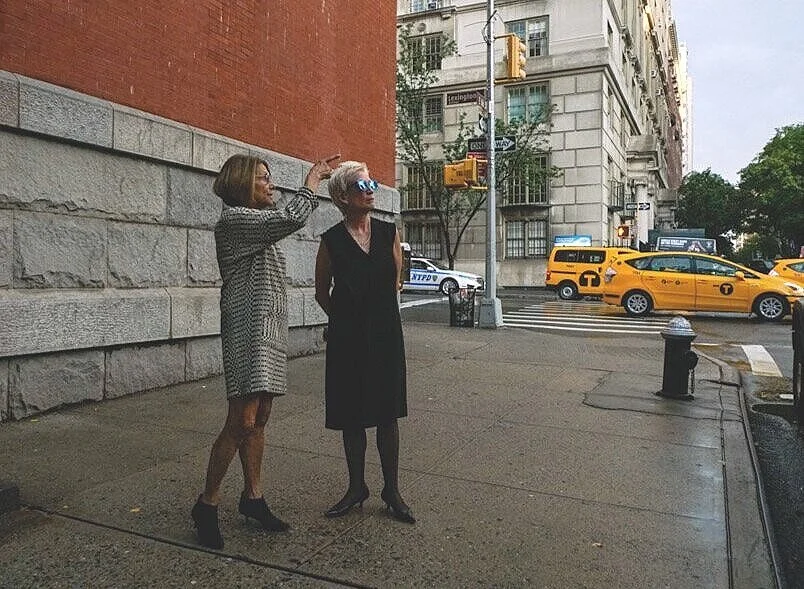
By Erica and Karen
A question that almost everyone who is not retired asks of everyone who is.
For a long time, our answer was, “Actually, nothing.” We did not prepare and had no plans. It hit us like a ton of bricks.
Not helpful.
Initially, we felt badly that we had so little to offer. We are women–lawyers and mothers!– who anticipated and planned for just about everything. Why hadn’t we planned for this—one of the most significant transitions of our lives? How could we have been so oblivious? Or clueless? Or whatever???
It turns out, though, our answer was wrong–we just didn’t realize it until later. We did prepare, but not in the the way people think you should. (And of course it is now distressingly evident that planning has its limitations—we would never have imagined retirement during a pandemic.)
Our approach was different. Instead of planning how we would live for the thirty years after retirement—an amazing gift we did not even know existed—we planned lives that formed a solid foundation for what we would do after our long-term careers ended. So—our careers were the ultimate retirement plan.
Think about it.
-
When we started out as the first large group of women in the male-centric workforce, we were expected to be mini-men. It took us a while to learn that, to succeed, we had to come out as women. We had to paint a picture of what career women looked like. So we worked hard to create new personal brands centered around our work. Now that our careers are over, we have to paint a picture of what retired career women look like. We did it before. We can do it again.
-
Key to our success was our confidence that we belonged at the table. We acquired that confidence only after we figured out we had what it took to succeed—and to do it our way, as women. When we retired, we lost that hard won confidence—and it showed. We began to understand that, to be successful at retirement, we needed to get it back. We knew what we needed to do. Once again, to do it our way, as women.
-
By choosing our careers, and working for forty years, we took control over our lives. When we first retired, we felt felt a distinct loss of that control, and feared we might never have agency again. Once we figured out we needed to get a grip, we got back on the job—the job, entirely up to us, of styling a retirement that suits us.
-
Working taught us about failure as well as success. We learned to navigate our mistakes, to overcome challenges, to solve problems, and to execute solutions. Once we retired, we faced new challenges and problems—and we made new mistakes. But we had the muscle memory to know how to deal with them.
-
At work, we had a value proposition. Our skills, our experience, our relationships were all part of our business worth. Those same skills, experience and relationships allow us to define our value proposition in this new stage.
-
Part of our job success was building communities and networking. We got ahead by being good team players with broad relationships. Women know how to do that. Now we have to build new communities—this time on our own, but we’ve had lots of practice. All of our lives.
-
Working for decades gives financial security. Financial security gave us independence and allowed us to make choices—while we worked and after our careers ended. Being able to make choices gave us power. We can use that power now.
So yes, we were shocked and unmoored right after we retired, and we wondered why we hadn’t anticipated what would happen, why we hadn’t made a plan. We didn’t realize right away there is no plan that allows you to shortcut the process. We had to deal with the trauma of being dumped on our heads before we could start to create a new landscape for ourselves. Then we still needed to figure out exactly what we wanted to do, something different from what we had done before. But we finally got it—working for four decades was a good way to plan for retirement.
You too will need to go through the retirement process before you too are able to land on your feet. But don’t worry. You will.

Thanks Karen and Erica. You have really summed this up well. We all think we are planning for retirement but, in reality we still are quite confronted by the rather dismissive attitde of others to those of us who are retired. So we reinvent ourselves, using those same skills we had previously. I’m finding the best thing that has come from our COVID lockdown is that I have been able to slow down and not feel I had to keep "doing’ things and now I am beginning to understand what true retirement can be and bring. That is, contentment with where I’ve been and where I want to go to next.
Thank for this — what an excellent analysis. You’re so right — Planning for a satisfying retirement involves drawing on own experience and life skills, and there’s no way to sidestep the process of transitioning. But I also think there’s value in awareness — just the knowing that others experience challenges to reorient — which alone can help get you out of getting down when you need your motivation the most. But I never realized that the work we all chose is part of that planning — so true! Thank you for this wonderful piece! You rock!
Thanks!