
Thanks, Bismarck. Now It’s Our Time.


By Karen and Erica
Have you ever thought about how retirement came to be?
Retirement was invented about 130 years ago.
[B]ack in 1889, German Chancellor Otto von Bismarck invented the idea of retirement, establishing the concept for the rest of us. “Those who are disabled from work by age and invalidity have a well-grounded claim to care from the state,” he said at the time. He wanted to address high youth unemployment by paying those 70 and older to leave the workforce, and other countries followed suit with retirement ages around 65 or 70.
Somewhat later, the United States created its own retirement schemes–governmental and private. The 1950s saw its zenith. Public health advances meant that people who reached retirement age could expect to live into their 70s, for the first time exceeding the age at which they became entitled to Social Security–65. These retirees, mostly male, had weathered the Depression and at least one world war. Many of them fit directly into the original concept because they were actually disabled from work by age and invalidity. They were more than ready for a little rest, and a little fun. They were entitled to their Golden Years.
The phrase “Golden Years” became widely popular in the 1950s thanks to a marketing campaign by an insurance company that promoted retirement as the best stage of life. The idea was to shift the perception of aging from decline to one of opportunity, leisure, and fulfillment. It suggested that after decades of hard work, seniors could finally enjoy a well-deserved period of relaxation, financial security, and personal enrichment.
Disposable income from pensions and Social Security allowed them to relax, with other retirees, in places like Sun City, Arizona, America’s first large retirement community. They could watch movies and TV. They could fly around the world. They could take long road trips too, as fuel costs were low and nationwide highways, with rest stops, allowed for long distance driving in comfort.
Retirement was fun. Every worker wanted to reach the delightful status of retiree.
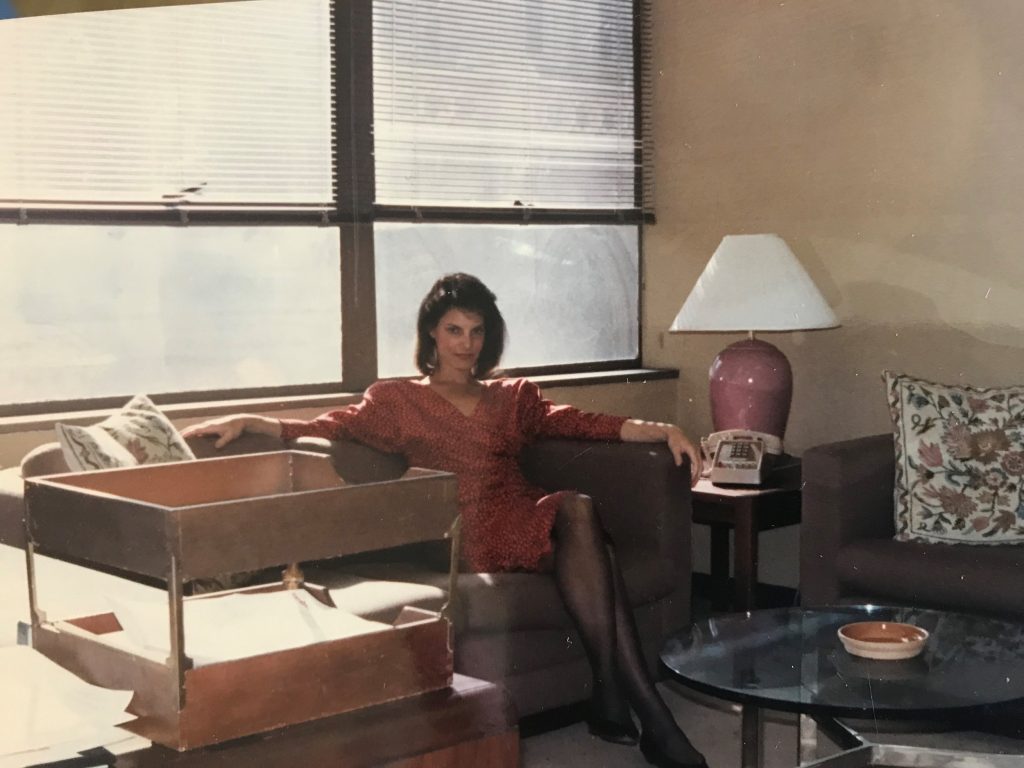
But then, imperceptibly at first, retirement became more of a stigma than a desired status. By the time we retired–the first large group of career women to stay in the workforce for four decades–retirement had lost much of its cachet. To us, the 1950s vision of retirement seemed more like a penalty than a reward. The word itself had become demoralizing.
What happened?
What happened is that the working world, and the people who work in it, changed dramatically.
- First, technology. Jobs were no longer physical. Workers now labored at a desk. The knowledge economy took hold, as we moved from telex and multigraph to computers to mobile phones to personal devices, and now AI. From local we went global. The working world was expansive, complex, and engaging.
- Second, public health. Workers now have longer and healthier futures. We are not disabled from work by age and invalidity at the time we retire, and our runway is not five or ten years. It is closer to thirty. A person who lives past her 50s is likely to live until her 80s or 90s, and to remain mentally and physically fit. We are no longer talking about what we are going to do for a decade or less. We are talking about what we are going to do for the next twenty or thirty years—way too long to be in retreat. But the retirement age has not changed.
- Finally, women entered the workforce in large numbers in the 1960s and 1970s. We fought for our careers, reshaped the workplace, and stayed until retirement. We demanded a place in the wider world, and we loved being there. We want to stay connected to that world. We want to spend the next few decades doing interesting and purposeful things. Because we worked for decades, many of us have the wherewithal–mental, physical and financial–to allow us to do just that—if we can tear down the barriers created by stereotypes.
Because retirement didn’t change. It still happened in a person’s early 60s, even though we now had such long post-career runways. It was still thought of as a time of non-productive leisure. It was understood that retired people were done, and old, and had little to offer a world that continued to progress and left them behind. Retired women especially were seen as old, wearing shapeless house dresses as they baked cake in the kitchen or sat in a rocker looking vacantly into space. That is not remotely what today’s retirees look like. But because the prevailing images were outdated, we were largely invisible behind them.
This mismatch between what people thought retirement was about and what people actually wanted from that status made no sense. That’s why we started Lustre–to change those images. To talk about us, and show us, as we really are. Vibrant and lively, with both experience and energy, and a strong desire to stay connected to the wider world. Happy to give our younger friends a leg up by sharing what we know. And also happy to participate in everything else–style, travel, politics, and fun. We might want to do something resembling work, in that it is purposeful, but what we want to do is likely to be totally different from our careers. We might want to become entrepreneurs. We might want to write code or books. We surely want to abandon 24/7 labor, but because we know so much we can be productive in many fewer hours. We are using our imaginations to structure this amazing phase of our lives.
130 years after Bismarck, it’s time to update his vision. And we will. Just as we changed the working world, we will now change retirement. We would love to start with a new word! We’re thinking about advance. I have advanced sounds a lot better than I have retired, right? But even if we can’t figure out the word, we can change what we all do and how others see us.
It’s a brave new world! And it’s ours!


We want to hear what you have to say.